earth

7 – Dragon

Here’s a “Cosmical” that will really test how much you’re paying attention to current events šŸ˜‰ Now this one isn’t based on natural events in our skies, which is mainly “Cosmical”‘s focus, but on a human made one; a history-making one that is worthy of mention.

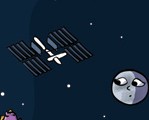
This past week the private company SpaceX successively launched its Falcon9 Rocket sending their Dragon capsule to the International Space Station, therefore being the very first commercial craft to ever visit the ISS. Since the ending of NASA’s Shuttle Program last year, the United States has had to rely on other for transportation to and from the ISS. In the mean time, private companies are competing to take over what was once the job of the Shuttle.

SpaceX has so far won the race there, but will they win in the end? It’s an exciting time as we watch the beginning of something new in space travel. Competition is the fire for innovation. We’ve seen this before when the US wanted to be the first to reach the Moon.

4 – Luna’s Albedo

**NOTICE: I’ll be on vacation until the beginning of May, so a new “Cosmical” will post soon after that! **

If you don’t know the term “Albedo,” it’s the reflection factor of the sun’s light off of some celestial body, like a planet or satellite. Technically, the Earth’s albedo is higher than our moon’s. But only very few of us have been lucky enough to witness the Earth’s albedo. For more information on what an “albedo” is, click here.

A crystal clear sky and a bright full moon (like the one we’ve just been having) can be both a blessing and a curse for sky gazers, depending on your sky gazing goal. She can be so beautiful, shining brightly like that while her bright sideĀ faces us directly. But if your goal is to stargaze, her light takes over and blocks out much of the star field.

Next month’s full moon will be while the Moon is closest to the Earth for the year, making it slightly larger and brighter in our sky.

3 – Earth Glow

While auroras can happen at any time of year there are “high points.” FIrst of all, the sun goes through an 11 year cycle, and every 11 years we enter a “solar maximum.” During this time the sun is very active. There will be more sunspots,Ā and more solar flares which can cause more frequent and stronger solar storms to hit Earth. In addition, for reasons not entirely known yet, the times around our equinoxes (spring and fall) are the best times for auroral activity on Earth. Earth is not the only planet in our solar system to shine with auroras, but ours are definitely the most viewed and studied.

We are entering our Solar Maximum now, and it will peak within the next year.